We build AI automation for banks, enterprises, and the companies they depend on. And the secure infrastructure underneath it. Two founders, thirty years each, across payments, fraud, security, and scale. A working prototype on your real data in a week.

We build AI systems that do real work for real businesses: document and decision pipelines that replace manual review, agents wired into the software you already run, and the data and infrastructure that keep them standing under load.
It ships one of two ways. We host and run it for you as a service. Or we build it on your infrastructure and hand you the source code. That is the path for banks, and for anyone whose data cannot leave the building.

Underneath the industry and the org chart, every company is a body of logic: the rules, flows, and decisions that determine what it can do and how fast. When a system fails or stops scaling, the symptom shows up in the product or the bottom line. The cause is almost always in that logic. A missing constraint. A misunderstood dependency. An unoptimized path.
We work at that level. It is why the systems we build are still running long after the demo.
Three ways we engage. Most clients start with Build. The other two exist so that what we build outlives us.
We design and ship the system: the AI automation, the software around it, and the infrastructure under it. Hosted by us, or built on your servers with the source code handed over.
Architecture review, technical strategy, M&A due diligence, and recovery of stalled builds. Objective judgment from people who still ship, not career consultants.
We leave your team able to run and extend what we built. No permanent dependency on us. That is the deliverable, not a bonus.
Everyone says they do AI now. The question that matters is whether the thing is still running a year from now, under real load, inside your compliance boundary, maintained by your people.
We are not a team that formed when the models got good. Between us: safety-critical autonomous-vehicle architecture for a 500+ engineer codebase, global fraud-detection machine learning at payments scale, and billion-record risk platforms. We were shipping production systems long before AI was the reason to call us.
We work where data cannot leak and auditors ask questions. On-premises deployment, your infrastructure, your compliance boundary, your source code. For a bank that is not a feature. It is the entry requirement, and most AI shops cannot meet it.
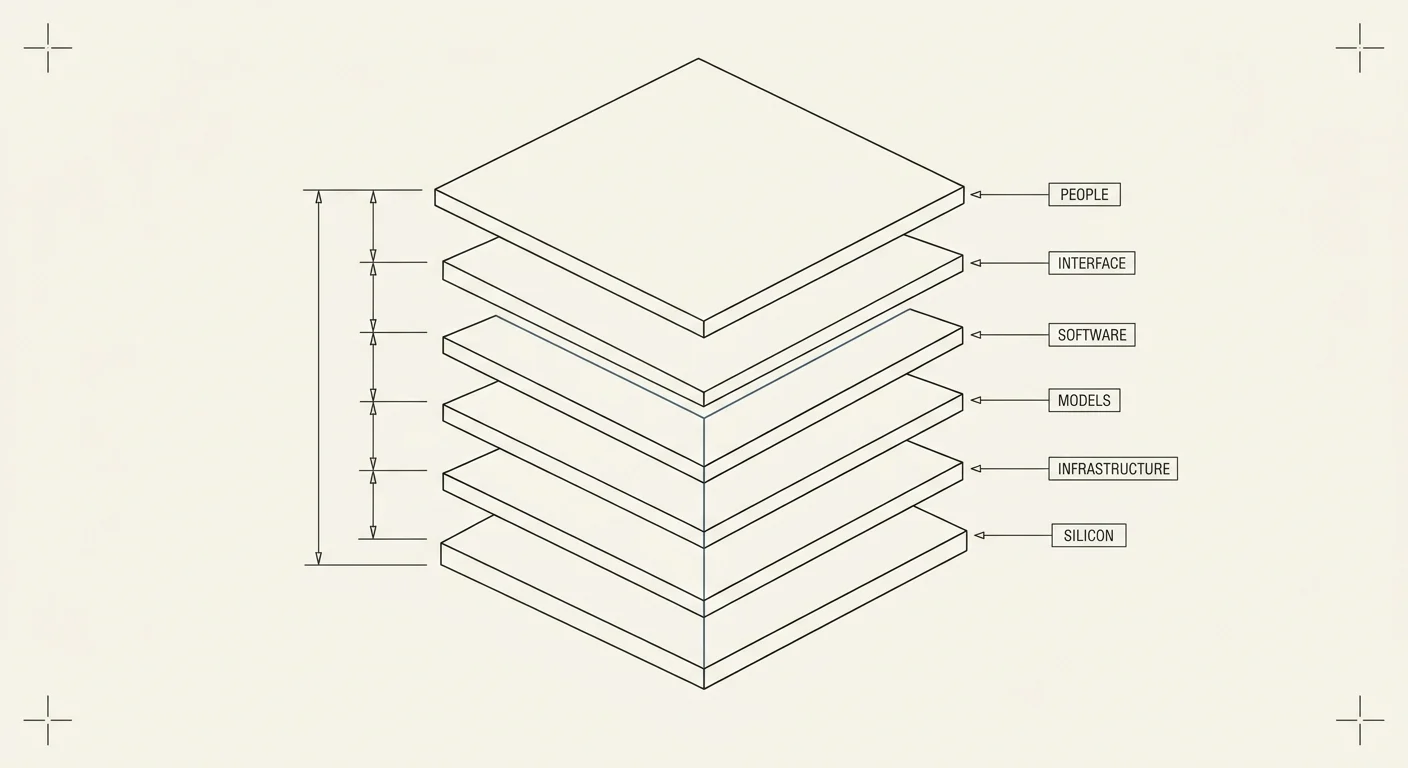
AI still sits on databases, servers, and networks. That is exactly where these projects die. We build the whole column: the model, the data, the infrastructure, the interface, and the practice that keeps it running. The demo is the easy part, and it is not the part we sell.
You get the founders doing the work, accountable end to end. No account manager relaying messages, no bench of juniors learning on your project, no seat count to justify. When a build needs more hands, we bring in specialists we have shipped with for years.
Most engagements start where the value is most obvious: an AI tool that does real work for a real business. The reason it holds up is everything below it. We can go as deep as the problem requires, all the way down to the silicon.

Bare metal optimization. CUDA kernel tuning. Hardware-specific constraints and maximizing compute density per watt.
Distributed systems architecture. Network topology. High-availability clusters and fault-tolerant storage routing.
Algorithmic architecture. Weights and biases tuning. Inference optimization and deployment pipelines.
Application layer logic. State management. API design and inter-service communication protocols.
Control surfaces. Human-computer interaction paradigms. Information architecture and semantic styling.
Organizational design. Engineering culture. Process optimization and knowledge transfer mechanisms.
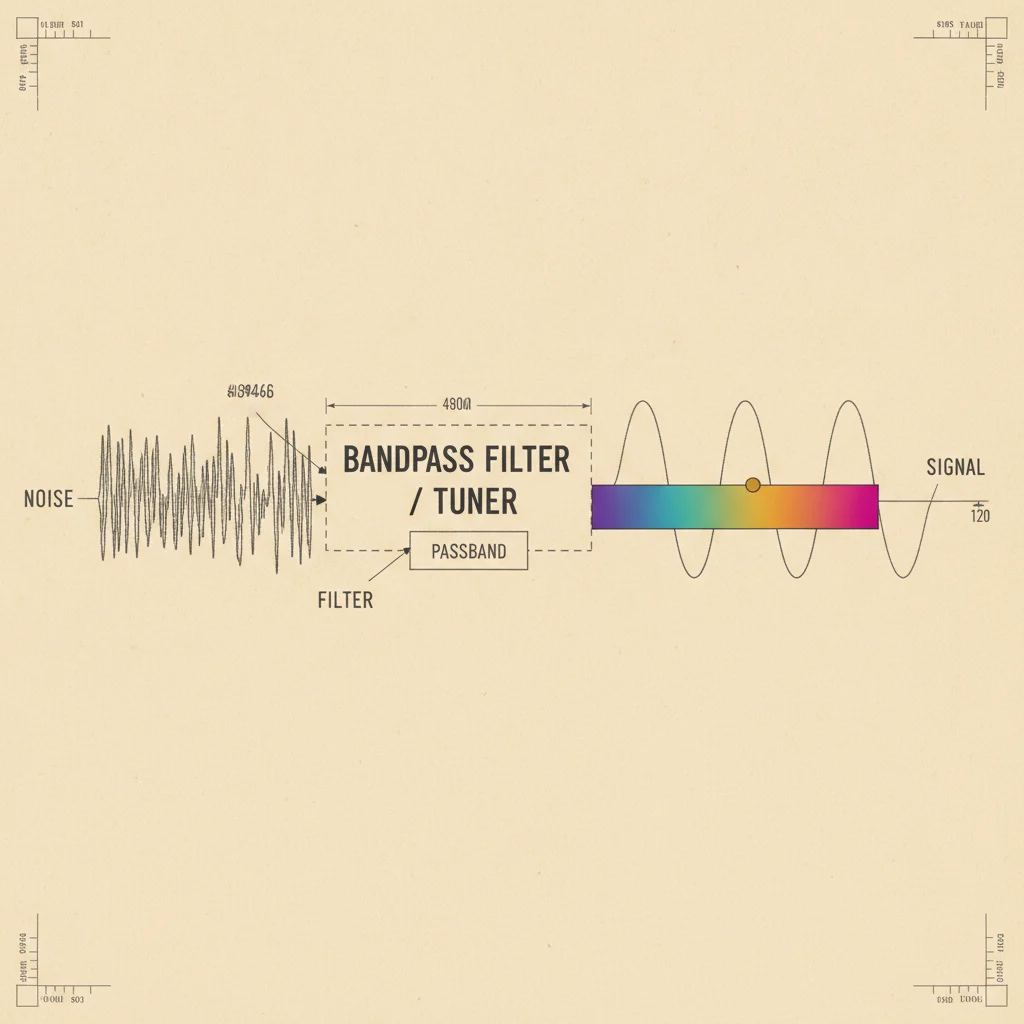
In complex systems, effort is rarely proportional to outcome. Ninety percent of the system functions adequately. The failure, the bottleneck, or the friction point exists within a critical ten percent.
Amateurs turn every knob, hoping to stumble upon a better state. This introduces chaos and obscures the original baseline. Professional engineering is the exercise of applied judgment. It is the ability to observe a complex mechanism, isolate the variables, and apply force precisely where leverage lives.
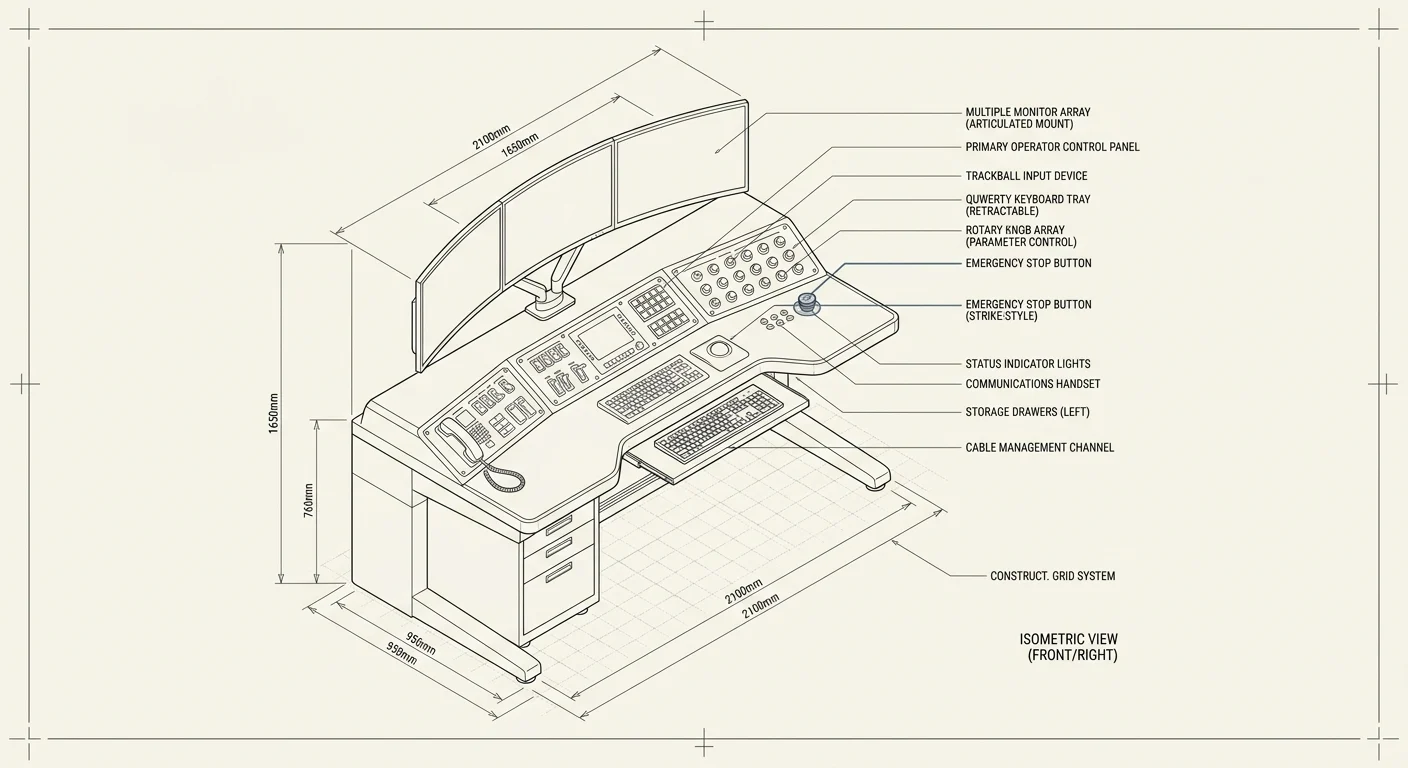
We provide the control surface. We identify the specific intervention required (structural, algorithmic, or organizational) and execute it with minimum necessary displacement.


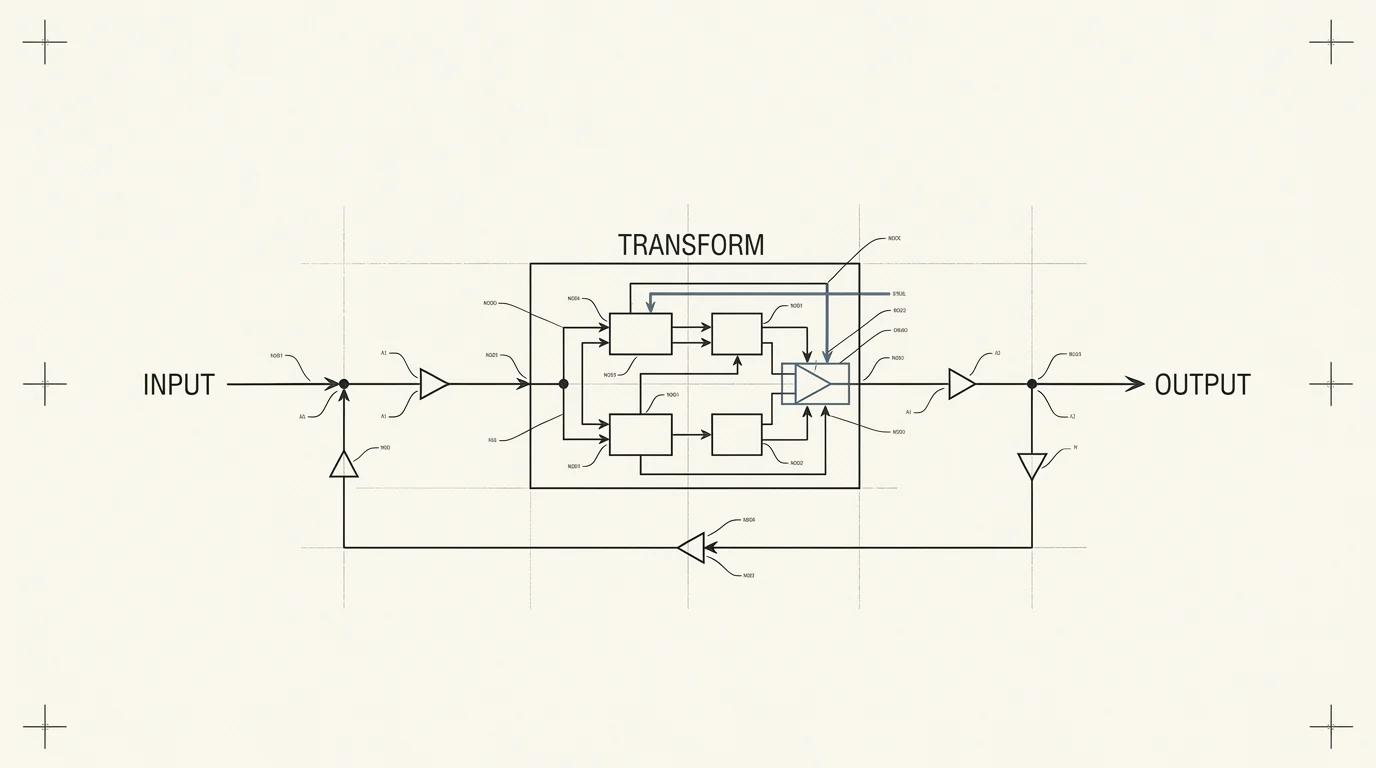
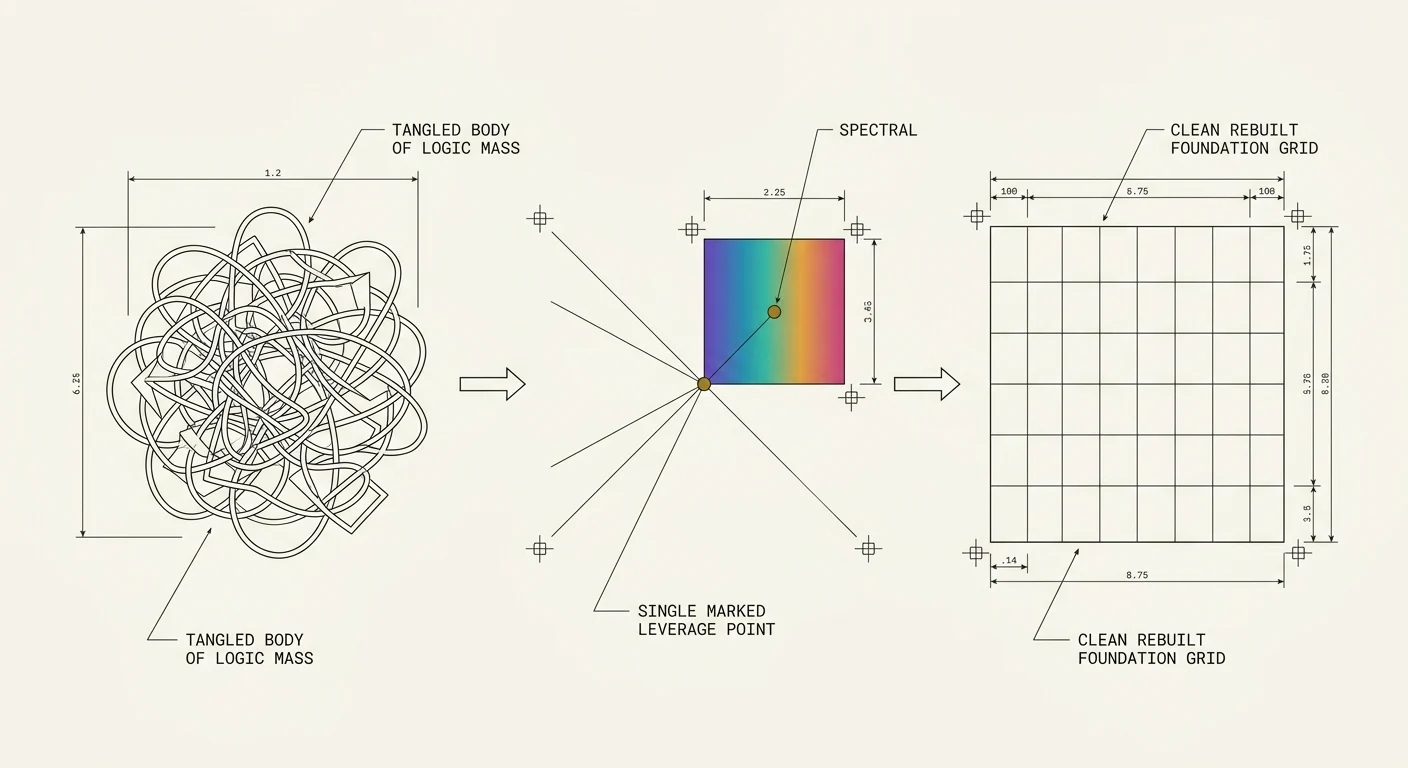
Every company is, underneath the org chart and the dashboards, a body of logic: a set of rules, flows, and decisions that determine what it can do and how fast it can do it. Most of that logic is implicit, scattered across spreadsheets, habits, and aging software. It works until it doesn't scale.

We dismantle the apparatus to read the structure beneath the marketing wrapper: the data structures, the execution paths, the dependencies that are actually load-bearing.
Ninety percent of the system works. The failure lives in a critical ten percent. We isolate the one place where a precise change moves everything downstream.
We apply force precisely where leverage lives, with minimum necessary displacement, and rebuild the foundations so the rest can be built on solid ground.
We work across industries and go deepest where the logic is dense, the data is regulated, and the cost of getting it wrong is measured in more than a bad quarter.
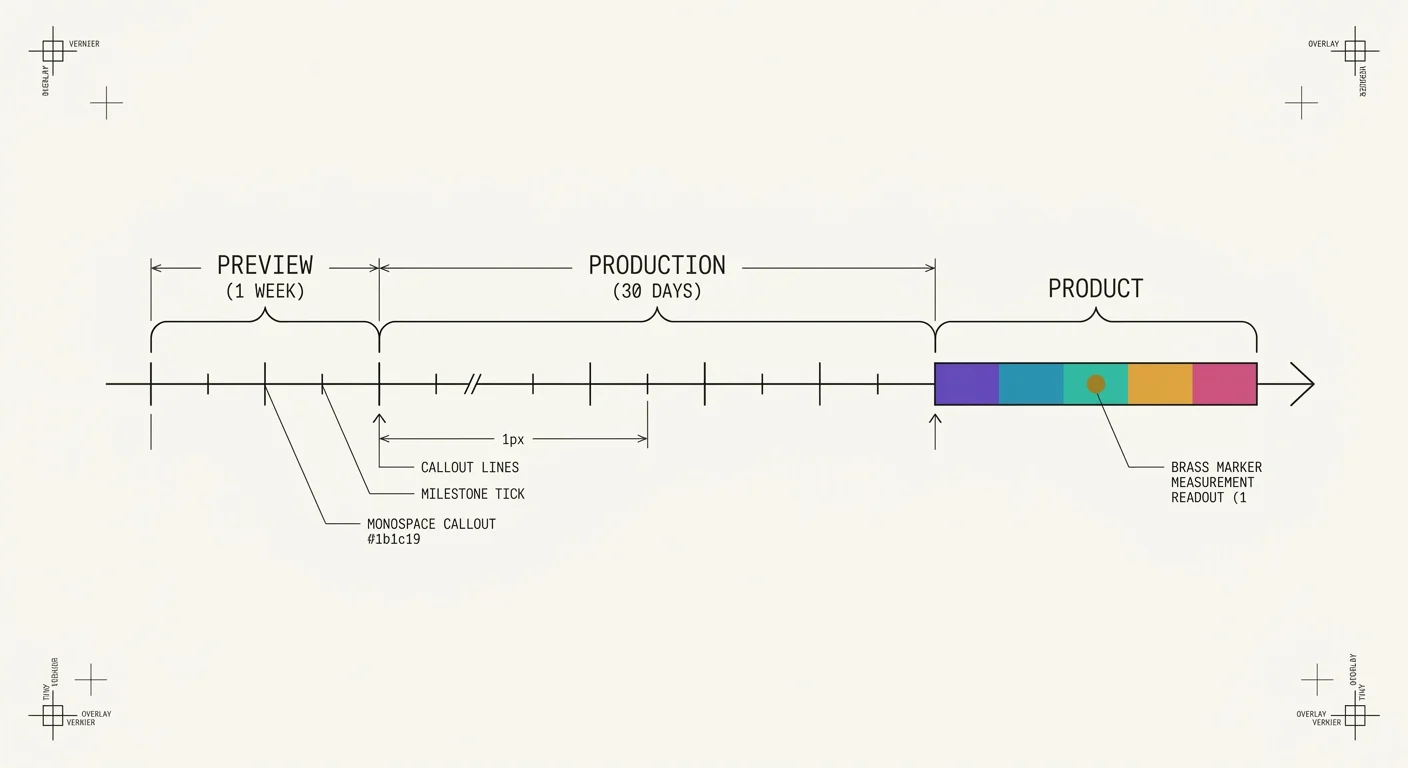
We ship in small, independently verifiable increments, so progress is something you can see rather than a status report. A working preview lands in the first week, a production-grade increment inside thirty days, and where the problem recurs, the work compounds into a product.
A working result you can hold, not a deck.
A production-grade increment under real load.
Recurring problems compound into product.

Anonymized case studies: the problem, the leverage point, and the system that came out of it.
A one-off document-review effort that kept recurring. We built it as a pipeline with human-in-the-loop checkpoints, then extracted the recurring core into a product.
Multi-generational governance run on habit and memory. We turned implicit institutional knowledge into a structured decision system built for a long horizon.